Teachings and Ideas
Becoming a Monk or Novice
Novice and full ordination in the Theravada tradition: who may ordain, what the ceremony involves, and temporary ordination.
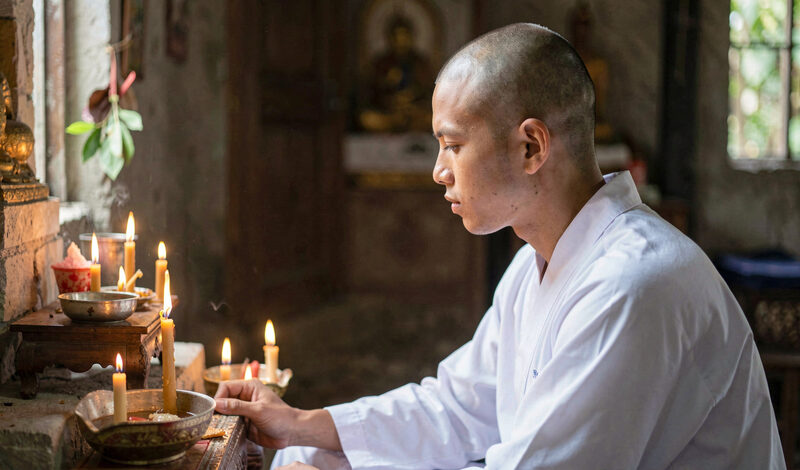
The saffron or ochre robe is the most recognisable thing about a Theravada temple, and the least understood. Behind it sits a formal process, a code of rules and, in Thai culture, a custom of temporary ordination that surprises most outsiders. This guide explains how a person becomes a novice or a monk in the Theravada tradition, what the commitment involves, and what it looks like when it happens in Australia.
Novice and monk: the two steps
The order has two levels. A novice, a samanera, undertakes ten precepts: the five precepts of lay life made permanent, plus rules against eating after noon, entertainment and adornment, luxurious beds, and the handling of money. Full ordination makes a bhikkhu, who lives by the 227 rules of the monastic code, the Vinaya. The jump is large: where the novice rules are a stricter version of a disciplined lay life, the bhikkhu's code governs nearly every act of the day, from how robes are worn to how a meal is received.
Women can undertake the novice's ten precepts, and the question of full ordination for women, bhikkhuni ordination, has been one of the live debates in modern Theravada. A small number of bhikkhuni communities exist in Australia; some temples recognise them and some do not.
What the ceremony involves
Ordination is performed by a quorum of monks inside a consecrated boundary, a sima. The candidate first asks for the going-forth, has his head shaved, and is presented in white. He asks the assembly for the robe, takes the novice precepts, and the robe is changed for the saffron of the order. For full ordination the assembly questions the candidate on his eligibility: age, freedom, health, debts and obligations. The questions are formal but real; the order wants to know it is ordaining a free adult who has chosen this.
The texts and customs behind the ceremony are described with characteristic directness in Thanissaro Bhikkhu's essay on Buddhist monastic traditions.
Temporary ordination, the Thai custom
In Thailand, and among Thai communities in Australia, ordination is not assumed to be lifelong. It is common and honoured for a young man to take robes for a few weeks or months: before marriage, to make merit for parents, during the rains retreat, or simply to learn. The man ordains fully, lives by the Vinaya, and disrobes by choice at the end. The custom keeps the monastery and the village permanently connected, and it means the monks a visitor sees on any given Sunday may include men who will be laymen again by winter.
Western men do the same. Most of the English-speaking monks in the Thai forest tradition began as temporary or trial ordinands, and several Australian monasteries run structured periods for exactly that.
What the rules mean day to day
A bhikkhu owns little: robes, a bowl, a few requisites. He eats what is offered, once in the morning and once before noon. He does not handle money, cook, or travel for entertainment. He keeps the five precepts as a floor under two hundred and twenty-two further rules. The food rules and the lay exchange they create are explained in the dana guide; what a visitor owes a monk in return is covered in the etiquette guide.
Ordination in Australia
Australian temples ordain, and the path is real but narrow. A candidate typically lives at a temple as a lay guest first, takes eight precepts, becomes an anagarika in white robes for months or a year, and proceeds to novice and then full ordination if the fit holds. Forest monasteries in the Thai tradition, such as those established in New South Wales and the small hermitages of the Queensland ranges, keep this sequence deliberately slow. For the tradition behind all of it, the Theravada overview gives the frame, and for the communities where it happens in this state, the temples guide is the map.
Disrobing and coming back
Leaving the order carries no shame in the tradition. A monk who chooses to disrobe does so by a simple declaration before a witness, and the laity absorbs him back without ceremony. Many of the men who give the blessing at a Sunday meal have themselves been on both sides of the bowl; some will cross it again. The permeability is deliberate: the order is a vocation, not a caste, and the temporary ordinations described above only work because the door swings both ways.
What lay supporters owe the robes
The order does not support itself. Every monk a visitor sees exists because a lay community feeds, clothes and houses him, and the rules that forbid him from cooking or earning are what make the dependence permanent. That is why ordination days are community celebrations as much as personal ones: a new monk is, in the tradition's own arithmetic, a field of merit the whole community has helped to plant. The exchange that follows for the rest of the year is described in the dana guide.